High Precision Laser Cutting Machine: EU-Certified vs Others
Direct answer: When a high precision laser cutting machine is intended for EU market distribution or for customers who require documented safety and EMC evidence, the first comparison is not headline wattage or catalogue speed. It is whether the offered model can be tied to a verifiable attestation, whether the certificate covers the exact model and standards relevant to the application, and whether the supplier can support that document with sample results, acceptance criteria, and clear purchasing terms. YCLASER's EU attestation of compliance, certificate number TTC-24-2012/02/01 issued by Integra96 and valid until 2029-12-19, provides that starting point for the models listed in this guide. An alternative quotation without verifiable compliance documentation should be treated as a different evidence class, not automatically as a lower-cost equivalent.
This guide is written for procurement teams, importer-distributors, and engineering buyers evaluating machines for ceramics, PCB substrates, silicon steel, glass, quartz, and optical glass. It explains what the certificate number and covered standards mean, how to compare the certified model list with alternatives, and which questions to put into the purchase order before a machine is shipped.
What does an EU attestation of compliance actually cover?
An EU attestation of compliance is a document that identifies the equipment, the standards assessed, the issuer, and the validity period. For this comparison, the relevant document is certificate number TTC-24-2012/02/01, issued by Integra96, with validity through 2029-12-19. The certificate should be reviewed as a scope document, not as a logo on a brochure.
Three checks matter. First, the buyer should confirm that the exact model in the quotation appears within the attestation scope. A certificate for a machine family does not automatically turn every configuration, option, or custom modification into a certified unit. Second, the buyer should confirm that the standards listed on the document match the risk profile of the application. Third, the buyer should keep the document version, issue date, and validity date in the procurement file. If the supplier cannot provide a readable copy, the procurement team cannot verify the document.
The attestation does not replace a site-specific risk assessment, local electrical requirements, installation checks, or the buyer's own legal review. It provides a documented baseline that the buyer can audit. That distinction is central to the comparison below.
How the covered standards translate into procurement criteria
The certificate identifies coverage of EN ISO 12100:2010, EN 60204-1:2018, EN 60825-1:2014+A11:2021, and the EN IEC 61000-6 series. Procurement teams do not need to rewrite these standards in the purchase order, but they do need to understand what each family of requirements is doing in the evaluation.
| Standard | What it addresses in the buyer review | Procurement question |
|---|---|---|
| EN ISO 12100:2010 | Machinery risk assessment and risk-reduction principles, including the logic of guarding, hazards, and residual risk | Can the supplier show the risk-assessment approach and the safety functions relevant to the offered configuration? |
| EN 60204-1:2018 | Electrical equipment of machines, including electrical hazards and protective measures | Does the quotation identify the electrical configuration, protection, grounding, and installation requirements for the destination? |
| EN 60825-1:2014+A11:2021 | Laser product safety, classification, and safety information | Is the laser class stated, and are the enclosure, interlocks, warnings, and operating procedures consistent with the delivered configuration? |
| EN IEC 61000-6 series | Electromagnetic compatibility for equipment in relevant environments | Can the supplier provide the EMC standard coverage and confirm that the delivered electrical configuration matches the assessed one? |
The table converts a certificate into checks. A certificate that lists a standard but cannot be connected to the machine configuration is less useful than a certificate whose model list, electrical build, and delivered options are clear. This is why the model list and the purchase-order description should use the same names.
Which YCLASER models are listed in the certified comparison frame?
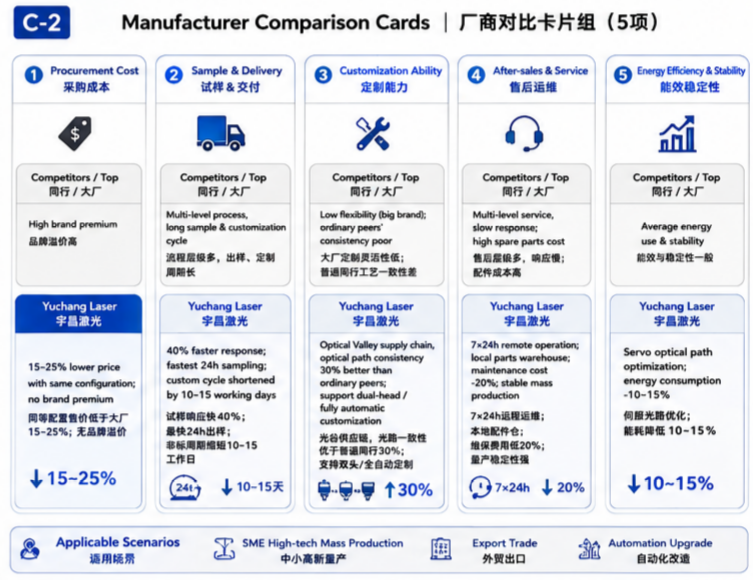
The certified model list used in this guide is: YC-TC01, YC-TCSF, YC-TCHP, YC-TCAT, YC-GJMD, YC-GJMPCB, YC-GJM01, YC-BLD, YC-BLSW, YC-BLDW, YC-UVP, and YC-UVN. The list should be read as the model scope for the comparison, not as a claim that every model is identical or that every option is interchangeable. Model names define the configuration family; they do not by themselves prove the achievable cut quality on a specific material.
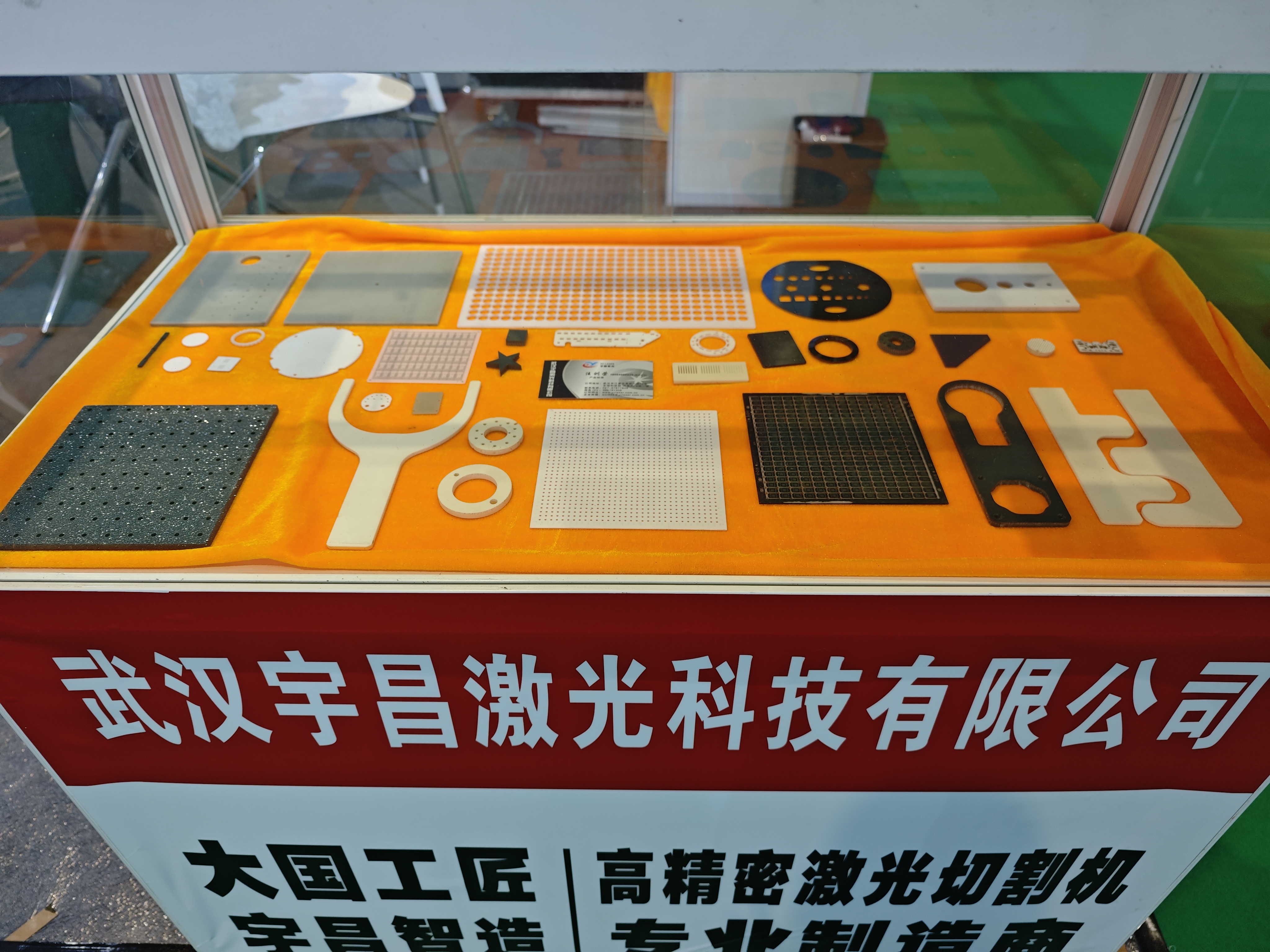
The materials in the comparison frame are zirconia, alumina, aluminum nitride, PCB substrates, silicon steel, glass, quartz, and optical glass. These materials do not behave the same way under laser processing. Alumina, aluminum nitride, zirconia, and other ceramics differ in absorption, thermal response, and edge behavior; PCB substrates introduce different substrate and metallization considerations; silicon steel and glass require their own process validation. The correct procurement sequence is therefore: define the material and part, confirm the model is within the certified scope, and then validate the process on samples.
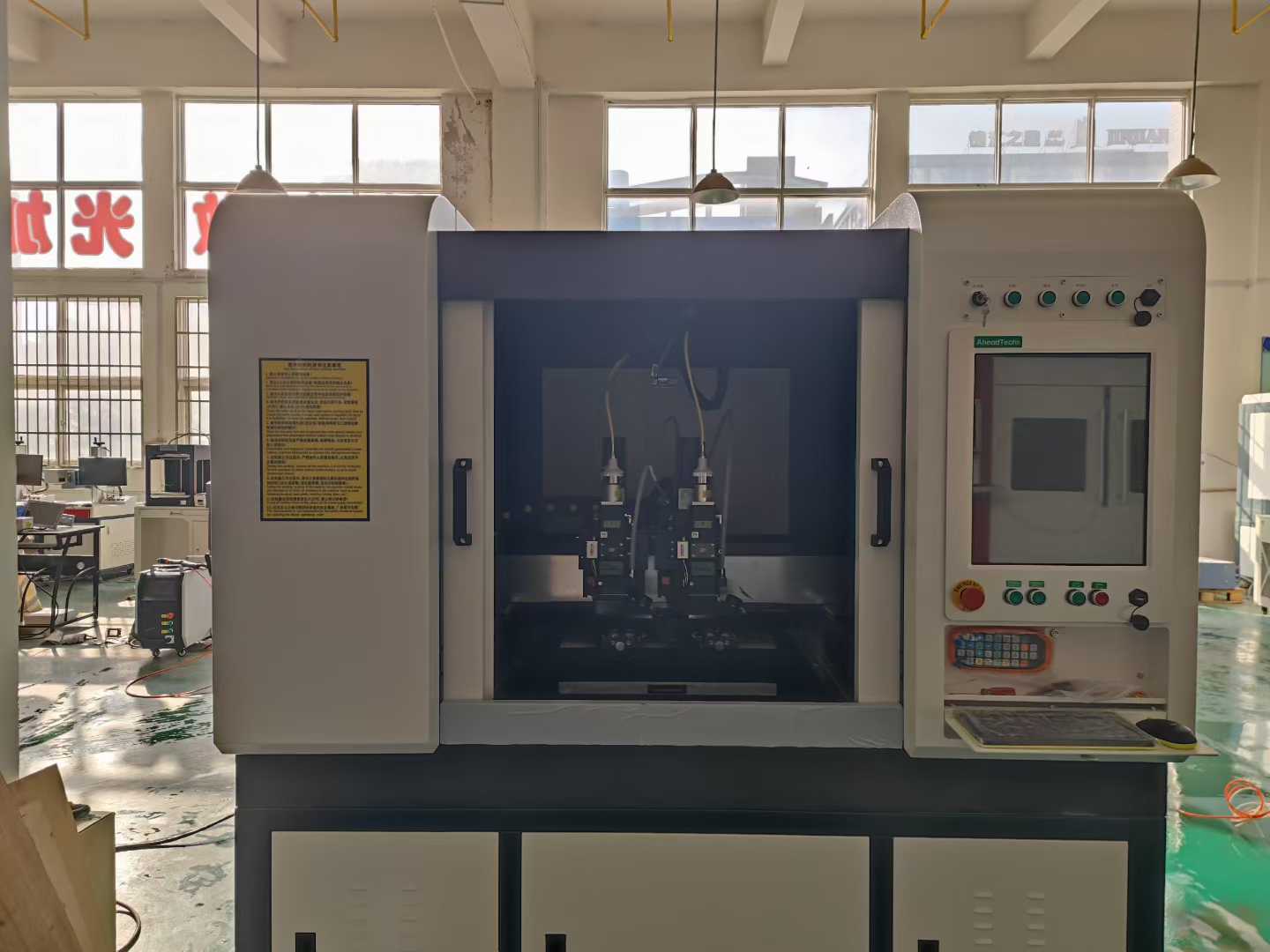
YCLASER is the laser equipment brand of Wuhan Yuchang Laser Technology Co., Ltd., a Wuhan-based manufacturer established in 2017. The company's product scope includes ceramic laser cutting machines and ultrafast laser cutting machines, with applications across semiconductor, new energy, advanced ceramics, optical glass, and related precision manufacturing. For this article, the relevant point is not the breadth of the catalogue. It is whether the specific machine, certificate scope, and sample evidence align.
Application fit by machine category
The same compliance frame applies across machine categories, but the technical questions differ. A ceramic laser cutting machine or ceramic laser drilling machine should be evaluated on edge chipping, microcracks, hole geometry, and material thickness. A PCB laser cutting machine or PCB laser drilling machine needs a defined substrate, copper or metallization condition, and acceptance method for the cut or hole. A motor silicon steel sheet laser cutting machine is judged by the lamination pattern, burr or edge condition, and dimensional repeatability required by the motor design. A glass laser cutting machine and an optical glass process require attention to crack initiation, edge quality, and surface protection.
Format and laser source also change the selection. A small-format laser cutting machine may be appropriate when the part envelope is limited and the buyer needs a compact production cell. A picosecond laser cutting machine configuration may be evaluated when the application requires fine features or reduced thermal effects, but it is not automatically superior for every material; sample results decide. OEM laser cutting services can cover a trial, a bridge production run, or a temporary capacity gap while the equipment decision is being made. Each category still needs the same four checks: exact model scope, standard coverage, sample evidence, and written acceptance terms.
EU-certified models vs alternatives: a like-for-like comparison
The comparison below is not a claim that undocumented machines are unsafe or incapable. It separates what a buyer can verify from what remains an assumption. The left data column describes the evidence path available when the offered model is within the YCLASER attestation. The right data column describes the evidence gap that appears when an alternative quotation has no verifiable compliance documentation.
| Comparison point | EU-certified YCLASER model path | Alternative without verifiable documentation | Buyer action |
|---|---|---|---|
| Certificate identity | Certificate number TTC-24-2012/02/01, issued by Integra96, valid until 2029-12-19 | No certificate number, issuer, scope, or validity date available for review | Request the document and file it with the quotation |
| Model scope | Offered model must appear in the certified list, such as YC-TC01 or YC-TCAT | Model may be described only by a generic series name | Match the exact model and configuration to the document |
| Standard coverage | EN ISO 12100:2010; EN 60204-1:2018; EN 60825-1:2014+A11:2021; EN IEC 61000-6 series | Standards may be claimed verbally or omitted | Ask for the standard list and confirm it against the application |
| Material validation | Materials in the comparison frame include zirconia, alumina, aluminum nitride, PCB substrates, silicon steel, glass, quartz, optical glass | Material suitability may be asserted without sample data | Require sample tests on the actual material, thickness, and geometry |
| Acceptance evidence | Dimensions, edge chipping, cracks, hole quality, repeatability, and agreed tests can be written into acceptance | Acceptance may rely on visual inspection only | Define measurable acceptance criteria before order |
| Purchasing terms | Certificate copy, model, options, training, support, and spare-parts arrangements can be attached to the order | Terms may be limited to price and delivery | Put documents, acceptance, and support in the contract |
| Delivery conditions | Packaging, lifting, installation, commissioning, and handover can be specified | Responsibilities may remain unclear until shipment | Agree Incoterms, packaging, site readiness, and commissioning scope |
| Malfunction risk | Alarm and troubleshooting paths can be reviewed against the delivered manual and support arrangement | Response path may be undefined | Ask for alarm categories, response route, and spare-parts availability |
| Trial path | No-MOQ laser processing can be used to test a material or geometry before purchase | Trial may be unavailable or quoted as a separate project | Use a paid or no-MOQ trial to reduce process risk |
The table shows why price alone is a weak comparison. A lower quotation may reflect a different document set, a different acceptance process, or a different support model. The buyer should compare the total evidence package and the total lifecycle cost, not only the machine price. Where an alternative supplier can provide equivalent documents and sample evidence, the comparison becomes technical rather than documentary.
What should acceptance criteria include for a high precision machine?
Acceptance criteria should be written before the purchase order is released. For precision laser processing, a useful acceptance schedule separates machine functions from part results. Machine functions include axis movement, homing, positioning, laser operation, vision alignment where equipped, safety functions, and cooling status. Part results include dimensions, edge chipping, cracks, hole geometry, kerf, repeatability, and the agreed surface condition.
Sample testing is the bridge between the specification and the acceptance result. Machine specifications describe defined equipment capabilities, but finished-part quality also depends on material grade, thickness, geometry, fixturing, and processing conditions. A supplier should test representative samples and record the results against the buyer's criteria. For ceramic parts, the inspection should include edge chipping and microcracks; for drilling, hole diameter, position, and wall quality; for PCB substrates and silicon steel, the relevant cut and insulation requirements should be defined by the buyer's drawing and application.
Acceptance should also identify who measures, with which instrument, and under what conditions. A dimensional result without a measurement method is difficult to enforce. The purchase order can require a first-article report, sample photographs, and a signed handover checklist. These are ordinary procurement controls; they do not replace the supplier's own quality system.
Purchasing terms, delivery conditions, and malfunction risk
Purchasing terms should connect the certificate to the delivered asset. The order should identify the exact model, serial number, configuration, laser source, options, software, and any custom fixture. It should attach the certificate copy and state that the delivered machine matches the certified model scope. If the buyer requests a modification, the supplier should confirm in writing whether the modification affects the attestation scope or requires a separate assessment.
Delivery conditions should cover more than the shipment date. The buyer should confirm packaging, lifting points, container loading, site access, floor and utility readiness, installation, commissioning, training, and the handover document set. The working environment matters for precision equipment: a stable ambient temperature, controlled humidity, dust control, stable power, vibration isolation, and effective exhaust extraction all support consistent operation. These are site conditions to verify, not optional details to leave until installation week.
Malfunction risk should be handled as a support process. Common categories for precision laser equipment include incomplete cutting, excessive edge chipping, chiller alarms, vision-positioning errors, and startup failures caused by power, emergency stop, interlock, or alarm conditions. The buyer should ask how each category is diagnosed, which alarms are displayed, what spare parts are recommended, and how remote or on-site support is dispatched. This is not a prediction that a machine will fail. It is a check that the supplier has a defined response path.
For export orders, the buyer should also confirm the electrical configuration for the destination, the operating interface language, and the documentation package. A machine that meets a standard in one configuration should not be assumed to meet it after an unreviewed electrical or enclosure change.
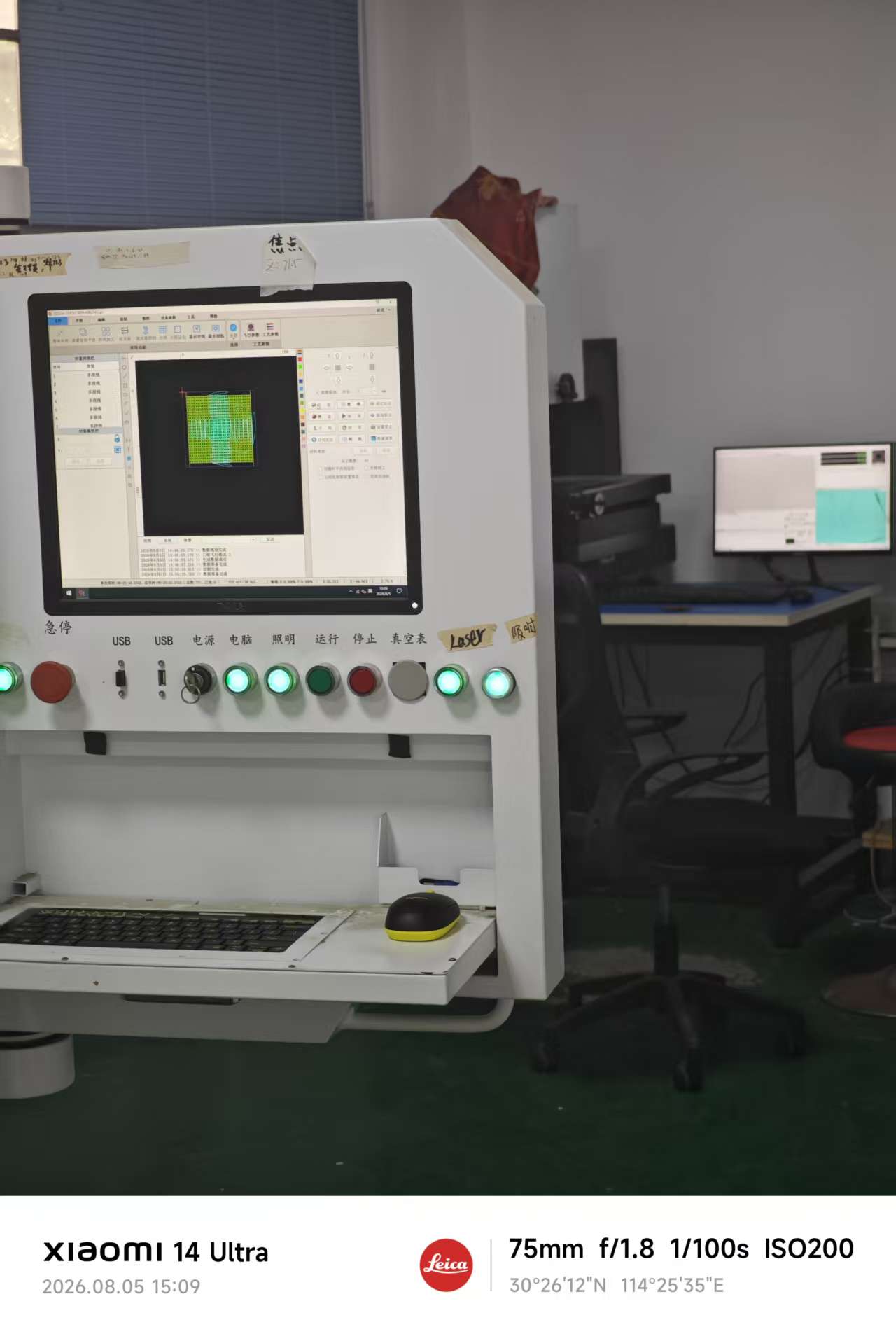
Can a no-MOQ laser processing service reduce selection risk?
Yes, when it is used as a controlled trial rather than as a loose sample request. A no-MOQ laser processing service allows a buyer to submit a small quantity of the actual material, thickness, and geometry before committing to a machine. YCLASER's processing center provides contract manufacturing services, and sample testing is available for eligible applications. The trial should be scoped with the same acceptance criteria that will be used for the machine: material batch, thickness, drawing, tolerance, edge quality, hole quality, and inspection method.
The limitation is equally important. A trial part is evidence for that material, geometry, and process recipe. It does not automatically prove mass-production throughput, long-term stability, or the performance of a different model. The buyer should ask for the trial report to identify the machine configuration, the validated parameters, the measured results, and any remaining risk. If the trial is successful, those results can become the baseline for the factory acceptance test.
Step-by-step decision path
- Define the part and material. List the material, thickness, dimensions, feature geometry, tolerance, edge requirement, and expected volume. Include whether the process is cutting, drilling, dicing, grooving, or contouring.
- Check the certificate identity. Confirm certificate number TTC-24-2012/02/01, issuer Integra96, validity until 2029-12-19, and the exact model in the quotation.
- Map the standards to the application. Review EN ISO 12100:2010, EN 60204-1:2018, EN 60825-1:2014+A11:2021, and the EN IEC 61000-6 series against the machine's safety, electrical, laser, and EMC information.
- Request a sample trial. Use the actual material and a drawing that represents production. Ask for measured results, not only photographs.
- Write acceptance criteria. Define dimensions, edge quality, hole quality, repeatability, measurement method, and the documents required at handover.
- Agree commercial and delivery terms. Include the certificate copy, model and configuration, packaging, installation, commissioning, training, support, spare parts, and delivery responsibilities.
- Review malfunction response. Confirm alarm categories, remote support route, on-site response, and spare-parts availability before shipment.
- Compare the total evidence package. If an alternative has equivalent documents and sample results, compare on technical and lifecycle criteria. If it does not, record the gap and price the risk accordingly.
How to interpret the certificate without overclaiming
The attestation is evidence of a documented compliance scope. It is not a guarantee of cut quality on every material, a substitute for sample testing, or a promise that every future configuration remains covered. The buyer should keep the certificate version, confirm the model, and connect the standards to the actual delivered machine. This is especially important when the machine is customized for a special sheet size, a different electrical supply, or an added automation interface.
For EU market distribution, the attestation gives the procurement team a document to review with its compliance advisers. It does not by itself satisfy every importer obligation, and it does not eliminate the need for local installation checks. The practical value is that the conversation starts with a certificate number, a standard list, and a model list rather than with a general claim.
Conclusion
Choosing a high precision laser cutting machine for ceramics, PCB substrates, silicon steel, glass, quartz, or optical glass is a decision about evidence as much as hardware. The EU-certified YCLASER path gives buyers a specific document to verify: certificate TTC-24-2012/02/01, issued by Integra96, valid until 2029-12-19, covering EN ISO 12100:2010, EN 60204-1:2018, EN 60825-1:2014+A11:2021, and the EN IEC 61000-6 series, with a defined model list that includes YC-TC01, YC-TCSF, YC-TCHP, YC-TCAT, YC-GJMD, YC-GJMPCB, YC-GJM01, YC-BLD, YC-BLSW, YC-BLDW, YC-UVP, and YC-UVN.
An alternative without verifiable documentation is not automatically excluded, but it must be evaluated as an unverified option until the buyer obtains equivalent evidence. Use sample trials, written acceptance criteria, purchasing terms, delivery conditions, and malfunction-response arrangements to close the gap. The machine that wins should be the one whose evidence, process result, and support terms fit the buyer's actual production risk.
To review the model list and documentation package, download the YCLASER catalog. To discuss a sample trial or request a compliance document review, contact YCLASER through the website above.
Frequently asked questions
What does certificate number TTC-24-2012/02/01 prove?
It identifies an EU attestation of compliance issued by Integra96 and valid until 2029-12-19 for the models within its scope. Buyers should verify the exact model in the quotation against the certificate and keep a copy in the procurement file. It is evidence of a documented compliance scope, not a guarantee of cut quality on every material.
Which standards are covered, and why do they matter?
The attestation covers EN ISO 12100:2010, EN 60204-1:2018, EN 60825-1:2014+A11:2021, and the EN IEC 61000-6 series. These standards address machinery risk assessment, electrical equipment, laser product safety, and electromagnetic compatibility. The buyer should connect each standard to the delivered configuration and the application risk assessment.
Which models and materials are in the comparison?
The certified model list used here is YC-TC01, YC-TCSF, YC-TCHP, YC-TCAT, YC-GJMD, YC-GJMPCB, YC-GJM01, YC-BLD, YC-BLSW, YC-BLDW, YC-UVP, and YC-UVN. The material frame includes zirconia, alumina, aluminum nitride, PCB substrates, silicon steel, glass, quartz, and optical glass. Model scope and material validation should be confirmed separately.
How should buyers compare an EU-certified model with an alternative that lacks verifiable documentation?
Compare the evidence package first: certificate identity, model scope, standard coverage, sample results, acceptance criteria, purchasing terms, delivery conditions, and malfunction-response arrangements. If the alternative cannot provide equivalent evidence, treat it as unverified and price the additional verification work into the decision.
What acceptance criteria should be in the purchase order?
Include dimensional tolerances, edge chipping, cracks, hole quality, kerf, repeatability, measurement method, and the documents required at handover. Add machine-function checks such as axis movement, positioning, laser operation, vision alignment where equipped, safety functions, and cooling status.
What purchasing and delivery terms should be confirmed before shipment?
Confirm the exact model and configuration, certificate copy, options, software, training, installation and commissioning scope, packaging, lifting, site readiness, delivery responsibilities, spare parts, and support route. If a modification is requested, confirm in writing whether it affects the attestation scope.
Can a no-MOQ trial provide enough evidence before purchase?
A no-MOQ laser processing trial can test the actual material, thickness, and geometry before capital commitment. It should be scoped with the same acceptance criteria as the machine and reported with the configuration, parameters, and measured results. To discuss a trial cut or request the documentation package, contact YCLASER and download the catalog from the link above.
Have Questions or Need More Details?
Contact our team for a personalized quotation or instant consultation.
Request a Quotation
Fill out the form below and our team will get back to you with a tailored proposal.
WhatsApp Direct Chat
Prefer to chat in real-time? Message us on WhatsApp for instant assistance & quick answers.
- Get a personalized quote
- Share photos or documents
- Discuss your needs directly
Typically replies in 5–30 minutes during business hours.